Peace in a tormented world
why art is important, even more during terrible times
MoriahS
11/1/20253 min read
Last year, I transitioned significantly in my life by choosing to pursue a full-time career in the arts. Now, a year later, I have no regrets about that decision: it is intimidating, as I am uncertain about what lies ahead, but it remains the most fulfilling life I could envision. Additionally, it allows me to devote my time to caring for my parents.
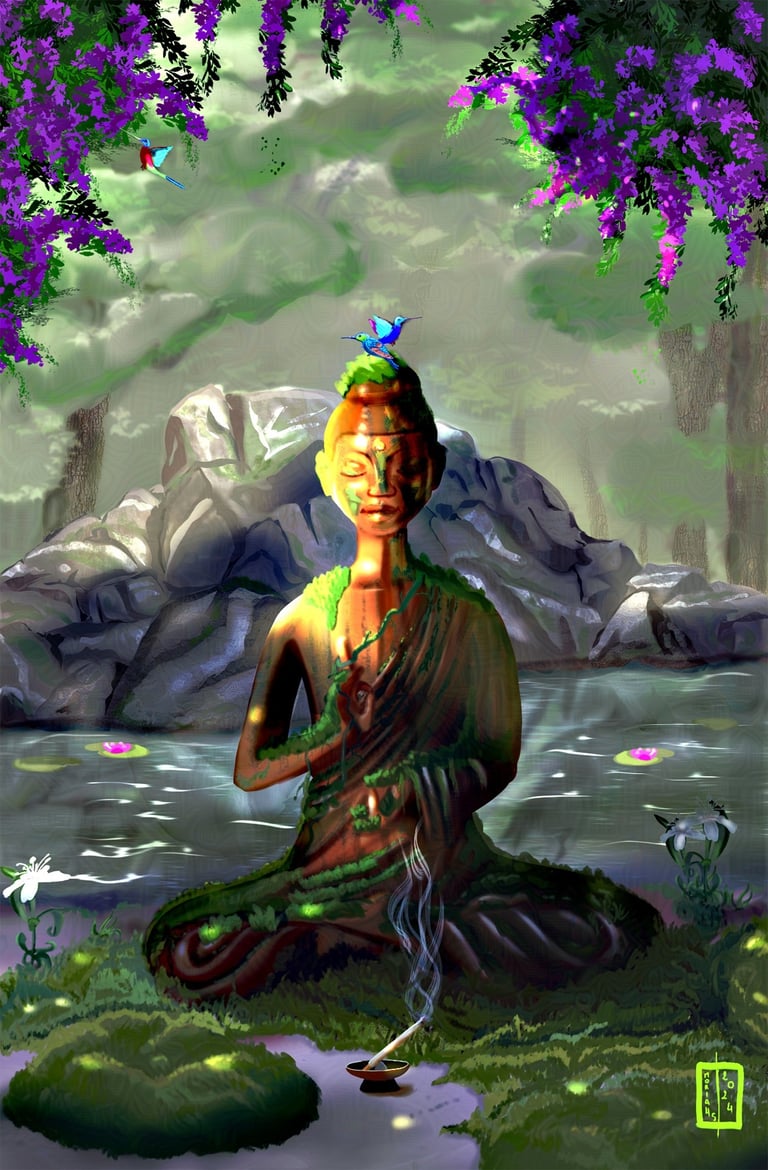
Art gives us the power to immerse ourselves in a different realm, enabling us to temporarily set aside our worries and fears, the harsh truths of the outside world, and reconnect with our inner beings. Moreover, art can serve as a medium for meditation, similar to the practices of Buddhist monks as they gaze upon their deities.
However, I may not have chosen the ideal moment to pursue a full-time career in the arts, considering the turbulent state of the world and the negativity it brings every day. Or perhaps I did?
When the world seems to be unraveling, art transcends mere indulgence—it becomes a crucial tool for human survival, resilience, and healing. Throughout history and within the realm of psychology, art serves as essential support during crises, conflict, and societal collapse.
First and foremost, art champions human dignity and nurtures connection.
Sanctuary for the Soul: During periods when physical safety, infrastructure, or political stability disintegrate, art provides an internal refuge. It reminds us of beauty, warmth, and significance, even when the environment outside is harsh. Anything that evokes a sense of joy, peace, or positivity deserves our focus, particularly in difficult times.
Shared Empathy: Art creates connections that ease feelings of isolation. Whether through a song, poem, or painting, art helps people feel seen and less alone in their challenges, bringing communities together through shared sorrow or hope.
Art serves as a mechanism for resistance and truth.
Documenting the Unspoken: Oppressive regimes often target artists first, as art expresses the truth. It captures the human experience during crises, bypassing propaganda and official narratives.
In Iran, the government regularly jails and silences musicians who speak out against state policies. Protest rapper Toomaj Salehi in 2022 and singer Mehdi Yarrahi in 2023 faced imprisonment and physical abuse for supporting the "Woman, Life, Freedom" anti-government protests.
In Siria, Under Bashar al-Assad, the state punished political cartoonists who drew anti-government satire. In 2011, attackers beat famous cartoonist Ali Ferzat and broke his fingers to warn other critics
Channeling Defiance: Throughout history, art has been a peaceful yet powerful means to confront injustice and motivate collective action. During the Middle Ages and early Northern Renaissance, the Catholic Church commissioned almost all major art. Open rebellion or anti-religious messaging meant severe heresy charges and execution. Painters could not hide anti-religious symbols; rather, they used dense, cryptic allegories to critique corrupt clergy, human foolishness, and societal decay while maintaining a safe religious alibi.
Art addresses both collective and individual trauma.
Beyond Words: Crises often inflict trauma in ways that language alone cannot capture. Art operates in the domain of metaphor, symbols, and emotions, allowing individuals to express and release complex feelings such as fear, sorrow, and anger. Art acts as a powerful nonverbal medium for recovery from abuse by bypassing the parts of the brain where language fails during trauma.
Psychological Resilience: Engaging in creative endeavors—whether by creating or experiencing art—reduces stress hormones and helps the mind cope with chaos, restoring a semblance of control for individuals by choosing the colors, shapes, and pace, helping them rebuild a personal sense of agency.
Induces Calm: Focused creative work promotes a state of "flow" and mindfulness, which reduces stress hormones and anxiety.
Art imagines a way forward.
The Blueprint for the Future: In times of societal collapse, reconstruction is inevitable. Art offers the creative vision needed to envision a brighter future. Writers, filmmakers, and visual artists bravely ask the question "What comes next?" and provide frameworks for hope and renewal. Syd Mead’s industrial concepts behind Blade Runner and Tron did not just paint backgrounds; he drew realistic, mechanically plausible blueprints. His highly detailed concepts for dashboard navigation screens, wearable technology, and autonomous vehicles are actively mirrored in the modern designs of companies like Tesla, Apple, and SpaceX.
"Art is not a pastime but a priesthood."
— Jean Cocteau
"We have art in order not to die of the truth."
— Friedrich Nietzsche